A mystery of Ethiopian amber age – Miocene, not Cretaceous
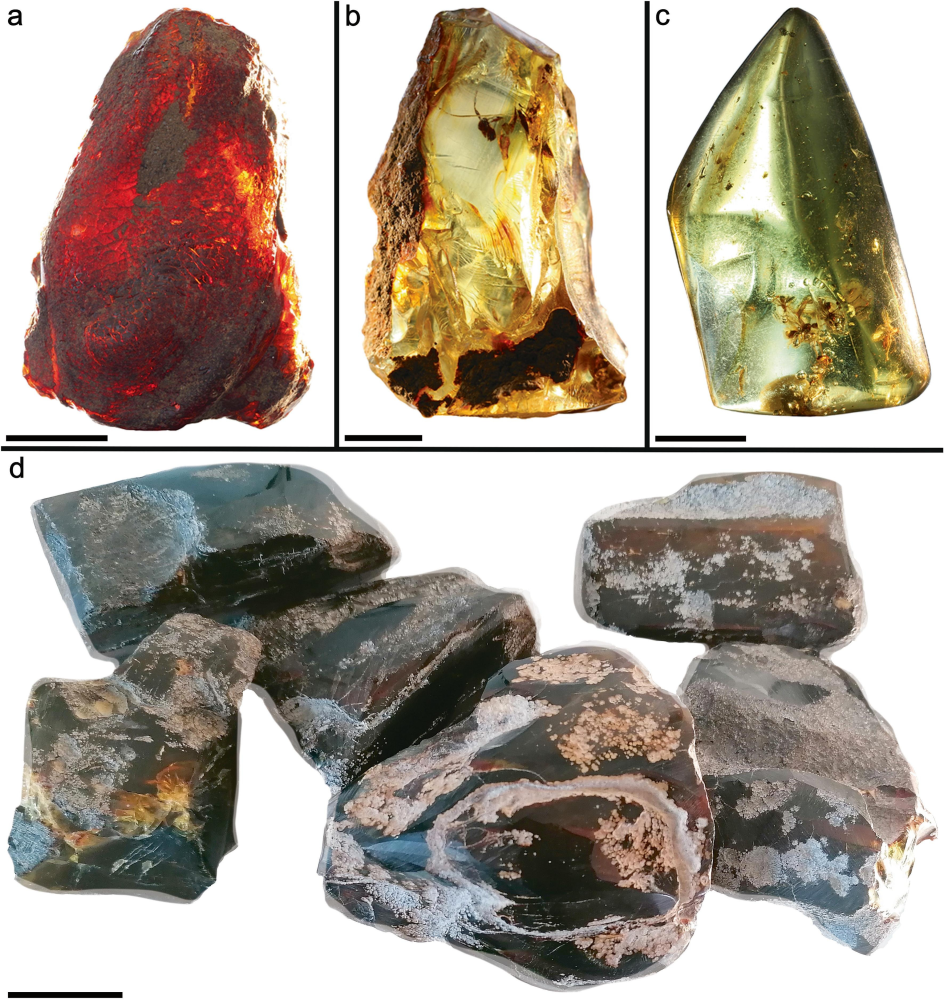
An international research team, including Dr Błażej Bojarski and Dr hab. Jacek Szwedo, UG Professor from the Laboratory of Evolutionary Entomology and the Museum of Amber Inclusions – presented new dating results for Ethiopian amber in the prestigious journal Gondwana Research. It was originally thought that Ethiopian amber came from a geological formation called Debre Libanos sandstone. It was dated to the early Late Cretaceous (Cenomanian, around 93–95 million years ago). But other studies of insects in this resin have made scientists wonder if the dates are correct. This has caused us to look again at the materials from different collections, including the largest collection of Ethiopian amber at the Museum of Amber Inclusions, University of Gdańsk. Pollen from amber-bearing sediments matched the abundance of pollen found in younger Cenozoic sediments and in nearby basins in South Sudan. Geological, geochemical and palaeoentomological studies of the Ethiopian fossil resins and sediments provide evidence for a younger, Early Miocene age of 16–23 million years. The chemical characteristics of the amber and the palaeobotanical data suggest that the resin was produced by a legume tree (Fabaceae), probably of the genus Hymenaea or its close relative. The fossils of arthropods and plants found in the new amber samples show a lot of variety and are similar to those found in other Neogene fossil resins. Palaeoentomological studies included, amongst others, ants, which one of the co-authors, Professor Vincent Perrichot, studied whilst at the University of Gdańsk as part of the UG Visiting Professors programme. Fossils found in Ethiopian amber show that humid tropical forests were still around in the Ethiopian Highlands until the early Miocene. Although Ethiopian amber is much younger than people thought, it is exceptionally valuable because it is one of only two African fossil resin with inclusions that we know about so far. Furthermore, Miocene forest biomes in Africa are exceptionally poorly documented.
Published paper:
BOUJU V., PERRICHOT V., SCHMIDT A.R., COLEE J., JEANNEAU L., ATNAFUF B., WANG B., BOJARSKI B., SZWEDO J. 2027. Miocene instead of Cretaceous: a reappraisal of the age of Ethiopian amber. Gondwana Research 161, 226–242.; https://doi.org/10.1016/j.gr.2026.08.022